

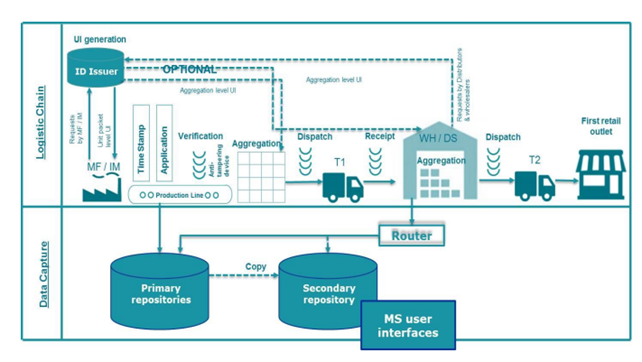
The EU traceability system was introduced in 2019 to combat the illicit trade in tobacco products. It is a track and trace system where all tobacco products are marked with a unique identifier (UI), so that their movement can be tracked from manufacturer to first retail outlet.
Artiklen er senest revideret 16. July 2026
The EU Traceability Requirements apply to all Tobacco Products
All tobacco products marketed in Denmark must be marked with a unique identifier (UI) issued by the Danish ID Issuer. The UI must begin with the Danish ID Issuer’s code.
This ensures that the product can be traced in accordance with the EU traceability requirements.
You can verify that a product is intended for the Danish market by checking that the code on the pack starts with one of these prefixes; "LEWL2" or "QCPSQR".
In accordance with the Commission Implementing Regulation (EU) 2018/574, “all tobacco products” include: Cigarettes, Cigars, Cigarillos, Roll-your-own tobacco, Pipe tobacco, Waterpipe tobacco, Tobacco for oral use, Nasal tobacco, Chewing tobacco, Novel tobacco product and Other (product placed on the market before 19 May 2014).
Common European Repository and Traceability Responsibilities
A common EU repository has been established in 2019, collecting information from all EU Member States to ensure full traceability of tobacco products. All movements of tobacco products from the manufacturer to the first retail outlet must be recorded and reported to this system. The repository enables authorities across the EU to track and trace tobacco products and verify that they have not been traded illegally at any point in the supply chain..
You must register
All businesses handling tobacco products – including manufacturers, importers, distributors, and retailers – must be registered with both an Economic Operator Identifier (EO-ID) and a Facility Identifier (FID). Only registered businesses are legally permitted to receive, store, transload, or sell tobacco products onwards. Registration enables the movements of tobacco products to be traced throughout the entire supply chain.
You must register your business and facilities with Persequor ApS (PSQR), the appointed ID issuer for Denmark
What Are the Technical Requirements?
Manufacturers, importers, and distributors must have equipment capable of scanning tobacco products and transmitting information to the EU repository. The equipment must record when tobacco products arrive, leave the facility, or are transloaded. Data on economic transactions, such as the issuing of invoices and receipt of payments, must also be stored for five years.
Who pays for my equipment?
You may apply for reimbursement of expenses related to scanning equipment via SGS Ontrack, which manages applications from across the EU. According to EU requirements, manufacturers are responsible for ensuring that all economic operators in the tobacco supply chain (up to the first retail outlet) are provided with the necessary equipment to record, read, and transmit data to the traceability system.
You can read more and apply for reimbursement on SGS Ontrack’s website